
You walk into your office restroom on a Monday morning. The trash has been emptied and the counters wiped, but something just feels… off. There’s a faint, persistent odor that you can’t quite place, and the floors look a little dull under the fluorescent lights. It’s a feeling that can undermine the professional image you work so hard to maintain for your employees and clients.
As someone who has spent over a decade managing commercial cleaning operations, I’ve seen this scenario play out countless times. Especially here in Goose Creek as we head into October, the cooling temperatures mean more people are spending their time indoors. This increases the use of shared spaces like restrooms, making hygiene and upkeep more critical than ever. A standard daily cleaning is crucial, but it often isn't enough to tackle the deep-down grime that builds up over time. Recognizing the early warning signs can save you from bigger problems down the road.
Common Signs and Symptoms
Think of your restroom’s condition as a health check for your facility. If you notice any of these symptoms, it’s a clear signal that the space is due for a restorative, professional-level clean.
- A Persistent, Unpleasant Odor: This is the number one sign. If you notice a funky smell even after the restroom has been recently cleaned, it’s not from a temporary source. This persistent office restroom odor Goose Creek businesses often struggle with is typically caused by bacteria thriving in places daily cleaning can't reach, like grout, drains, and under fixture edges.
- Dull, Grimy, or Sticky Floors: Take a close look at the floor, especially in the corners, along baseboards, and around the base of toilets. Do you see a dark, grimy buildup? Does the floor feel slightly sticky underfoot? This happens when daily mopping, without periodic scrubbing, inadvertently spreads fine layers of soil and residue rather than removing them.
- Discolored Grout Lines: Grout is porous and acts like a sponge for dirty mop water, bacteria, and uric acid. If your once-light-colored grout is now dark, stained, or black, it’s a sure sign that it’s harboring odor-causing bacteria and grime.
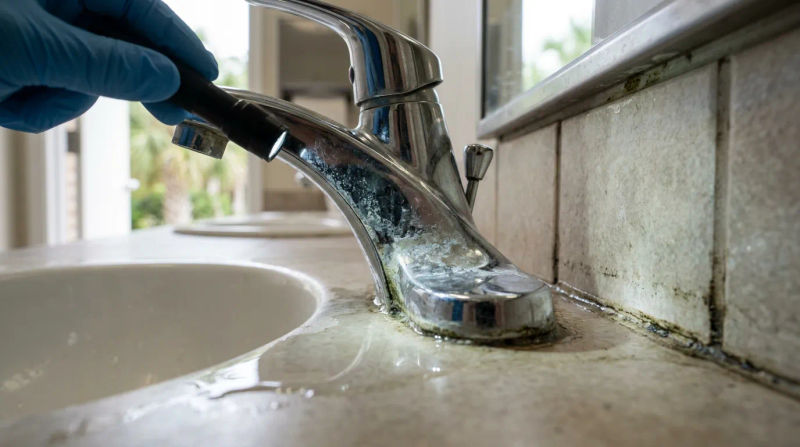
- Visible Buildup on Fixtures: Check the base of your faucets, the backs of toilets, and the crevices of soap dispensers. Do you see a chalky white film (hard water stains), soap scum, or a general layer of grime? This buildup is tough to remove with standard cleaners and makes the entire space look neglected.
- Dusty Vents and High Ledges: Look up. Air vents, light fixtures, and the tops of partitions are often-missed spots in a daily routine. An accumulation of dust and cobwebs not only looks bad but also contributes to poor indoor air quality.
- Dingy Walls and Partitions: Walls, especially around toilets and urinals, can become soiled over time. Partitions, particularly near the floor, often get splashed with mop water and other liquids, leading to stains and deterioration.
- Negative Feedback: The most direct sign of all. If you hear comments from employees or customers about the state of the restrooms, it means the problem is already impacting their perception of your business.
What Causes This Problem
Understanding why these issues occur helps clarify why a simple wipe-down isn't the solution. The root causes are often microscopic and cumulative, building up slowly until they become noticeable problems.
First, there’s a fundamental difference between daily cleaning and a restroom deep cleaning. Daily cleaning is about maintenance: removing trash, wiping high-touch surfaces, and restocking supplies. Deep cleaning is a restorative process designed to eliminate the embedded dirt and bacteria that daily cleaning leaves behind. It targets the root causes of odors and grime.
Many of the persistent odors come from biofilm, which is a slimy, invisible colony of bacteria that attaches itself to surfaces. It thrives in the damp, hard-to-reach areas of a restroom - deep within grout lines, inside floor drains, and under the rims of toilets. Regular cleaning might wipe away the surface layer, but it won’t eliminate the protected biofilm underneath, which is why the smell always comes back.
Floor grime is another major contributor. Many commercial buildings in the Goose Creek area, particularly those built in the 1990s and 2000s, feature durable tile flooring. While practical, the grout lines in these floors are notorious for trapping dirt. Over time, mopping with a standard string mop can actually push dirty water into these porous lines, effectively staining them from the inside out.
Finally, the tools and products used matter. Consumer-grade cleaners may not be powerful enough to break down hard water deposits, uric acid crystals, and thick soap scum. Without the right equipment, like commercial-grade floor scrubbers or high-pressure steamers, it's nearly impossible to extract the deeply embedded soil from textured floors and grout.
When to Call a Professional
So, when does it make sense to bring in outside help? Your in-house staff or daily cleaning crew works hard, but they are typically equipped for maintenance, not restoration. A deep clean is a specialized task.
Consider calling an experienced professional when:
- You notice more than one of the signs listed above. A single issue might be manageable, but a combination of odors, stained grout, and grimy floors points to a systemic problem that requires a comprehensive approach.
- Your own cleaning efforts aren't working. If your team has tried to tackle the odors or buildup without success, it’s a sign that you need stronger solutions and specialized equipment.
- You're unsure how to proceed. A qualified professional can perform an assessment and recommend a plan. They can also help you develop a better commercial bathroom cleaning checklist for your daily team to help maintain the results between deep cleans.
One of the most common questions I get is, how often deep clean office restrooms? The answer depends heavily on foot traffic. For a high-traffic office, retail space, or clinic, I recommend a quarterly restroom deep cleaning. For a smaller, lower-traffic office, a semi-annual service is often sufficient. The key is to be proactive rather than reactive.
Waiting until the restroom is in a state of obvious disrepair not only makes the restoration job bigger but also negatively impacts employee morale and your business's reputation. A clean, fresh-smelling restroom signals that you care about the details and the well-being of everyone in your building.
Conclusion
Keeping your office restrooms truly clean goes beyond the surface. It’s about tackling the hidden sources of dirt and odor that build up over time. Persistent smells, discolored grout, and grimy floors are not just aesthetic issues - they are signs of underlying bacterial growth that daily cleaning can’t resolve.
By learning to spot these warning signs early, you can take action before they become major problems that reflect poorly on your business. A proactive approach to restroom hygiene protects your facility's reputation and creates a healthier, more pleasant environment for your team and your visitors. Don't wait for complaints to start rolling in.
If you notice any of these signs, contact a local Commercial Cleaning professional for an inspection.